
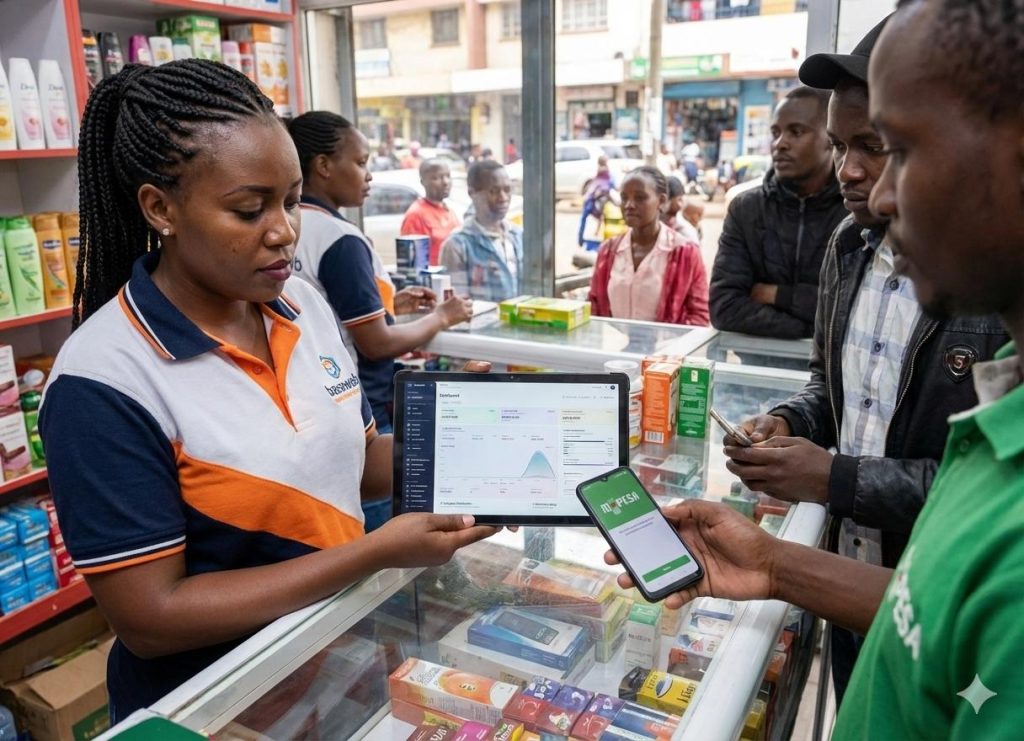
How Safaricom’s M-PESA Jumbe is tackling everyday frustrations in the way customers pay and businesses receive payments.
You’ve just finished lunch at a restaurant. The waiter brings your bill. You pay through M-PESA, your phone buzzes, and you put it away. Then comes the request: “Nionyeshe message.” You unlock your phone, open your M-PESA messages, and hand it over. The waiter checks the transaction, but in the process, you’ve also exposed details that have nothing to do with the payment: your name, phone number, and possibly your account balance.
Now imagine you’re at a busy petrol station. You’ve paid, but the attendant cannot confirm the transaction because the payment notification has gone to the manager’s phone. You wait. The attendant calls the manager. The queue grows. These are small everyday inconveniences, but they reveal bigger problems: customer privacy, slow payment verification, and business processes that depend on one person’s phone.
A different approach to payment confirmation
And this is where M-PESA Jumbe comes in. A different approach to payment confirmation. Safaricom’s M-PESA Jumbe introduces a way to address these everyday challenges. Customers can share payment confirmation without unnecessarily exposing their personal information, while businesses can nominate employees to receive payment notifications directly. The idea is simple: make it easier for customers to confirm payments and for businesses to manage transactions without unnecessary delays. But the interesting part isn’t just the technology. It’s the problems the technology is attempting to solve.
The bigger issue: What happens after the customer pays?
Businesses often invest heavily in making it easier for customers to buy. They introduce digital payment options, improve checkout processes, and offer multiple ways to pay. But what happens after the payment? Does the customer have to wait for confirmation? Does an employee need to call a manager? Is personal information being exposed unnecessarily? Can the person serving the customer resolve the issue independently? These are operational questions, but they directly affect customer experience. A transaction may take seconds, yet the experience surrounding it can create unnecessary frustration.
Three lessons businesses can take from Jumbe
- Convenience doesn’t end when a customer pays. Every step matters. The payment, confirmation, and final interaction all contribute to the experience. Businesses should examine the entire journey, not just the point of purchase.
- Give employees the tools to do their jobs. When routine activities depend on the owner or one particular employee, the business creates bottlenecks. Giving the right people access to the right information can improve service delivery and operational efficiency.
- Small frustrations can reveal big opportunities. Customers don’t always complain about every inconvenience. Sometimes they simply adapt, wait, or find workarounds. Businesses that pay attention to these moments can identify opportunities to improve before those frustrations become bigger problems.
M-PESA Jumbe is a useful example of how addressing an everyday inconvenience can create value for both customers and businesses. But the lesson extends far beyond mobile money. Think about your own business. Are customers repeatedly asked to provide information you’ve already collected? Do employees need managerial approval for routine tasks? Are customers waiting because your internal processes aren’t working together? Are there steps in your service that exist simply because they’ve always been done that way? These are worth examining.
Sometimes, improving your business doesn’t mean doing more. It means removing the things that make doing business unnecessarily difficult. That’s where meaningful improvement begins.
Keep exploring fresh perspectives, unexpected insights, and ideas that make you see business differently. See you in the next one.
